Business owners often approach technology providers with a simple, urgent request: “I need a better system.” They feel the friction in their daily operations—missed handoffs, dropped leads, chaotic fulfillment—and assume the solution lies in a new CRM, a project management tool, or a sophisticated AI integration.
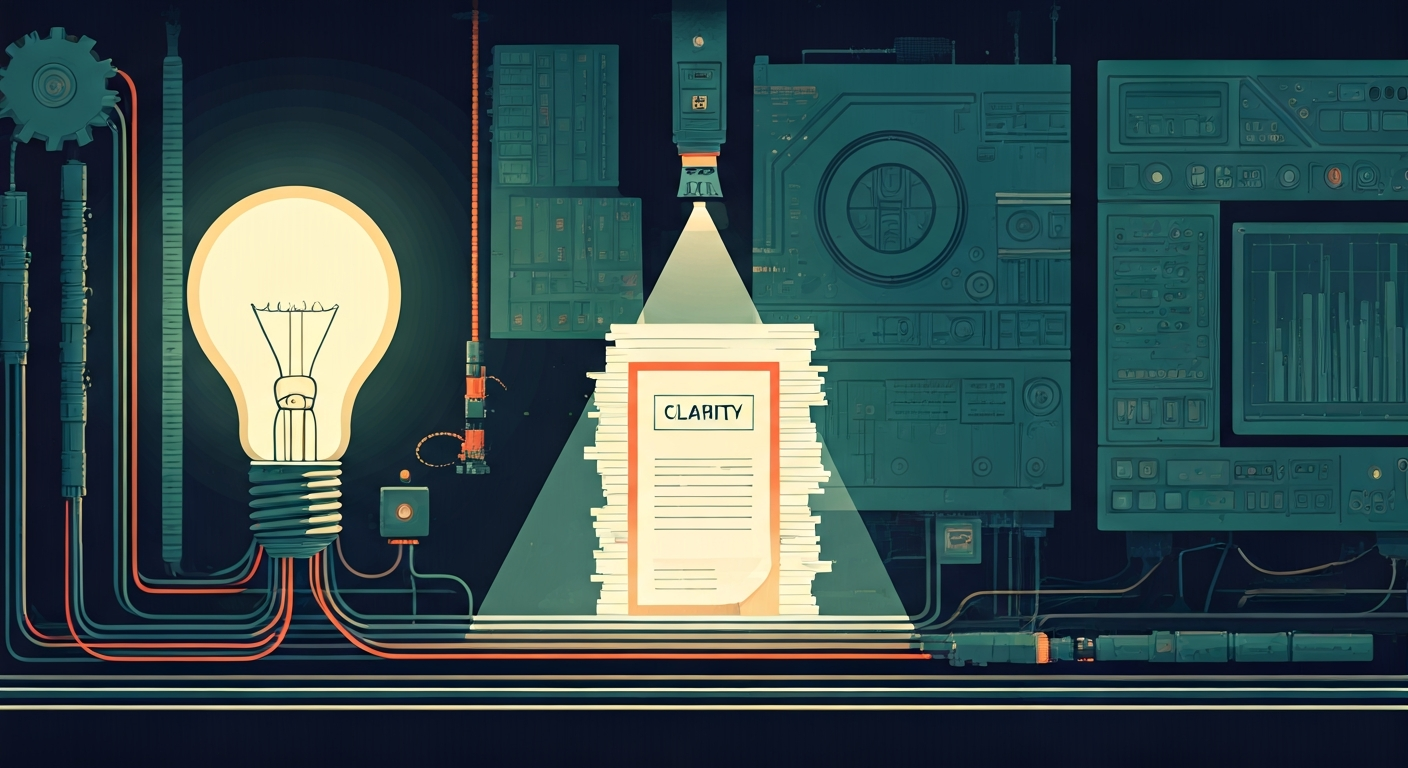
But in reality, most owners don’t need a better system yet. What they truly need is clarity.
They need clarity about where profit is leaking, where workflows are breaking down, which decisions are slowing growth, and what changes would make the biggest difference with the least friction. Without that clarity, even the best technology will fail.
At AMDG Ventures, we have reviewed hundreds of business models, pricing structures, and operational workflows. Across industries—from professional services and B2B firms to trades and specialty operations—the same pattern appears: Technology succeeds only when strategy, decision architecture, and operational priorities are defined first.
This is why the AMDG and Epoch partnership works so effectively. AMDG identifies what needs to change, and Epoch implements how those changes come to life through tools, automation, and systems. When these two pieces happen in the proper sequence, owners experience the one thing they’ve been searching for: durable, compounding profit.
Here is why clarity must precede automation, and how your business can achieve it.
The Problem: Technology as a Band-Aid
Automation is powerful, but it is not magic. If the underlying strategy of a business is unclear, automation does not fix the problem; it simply scales it.
Many business owners fall into the trap of using technology as a Band-Aid for structural wounds. They seek "better systems" without understanding the underlying issues causing the pain. This leads to a dangerous risk: investing heavily in tools that ultimately fail to address core problems.
Consider these common scenarios where technology backfires:
Automating a workflow that shouldn’t exist
If an owner wants a more efficient onboarding process, but the onboarding itself is inconsistent, confusing, or misaligned with customer needs, automating it only hardwires the inconsistency. You end up confusing customers faster than before.
Using software to manage an unprofitable pricing model
If margins are weak or pricing is based on guesswork rather than data, automating the quoting system just accelerates margin leakage. You might win more jobs, but you will bleed cash more quickly.
Implementing tools to compensate for unclear role definition
If the business lacks clarity on who owns what decisions, automation results in duplicated tasks, missed handoffs, or overcomplication. The software becomes a noisy to-do list that everyone ignores.
Technology performs beautifully when it is supporting a well-designed system. It fails when used to compensate for the lack of one.
The AMDG → Epoch Solution: Clarity First
To move from chaos to compounding growth, businesses must adopt a diagnostic-first approach. This is where the synergy between AMDG Ventures and Epoch Tech Solutions transforms operations.
AMDG acts as the diagnostic engine. Through strategic profit diagnosis, we identify the specific levers that will drive growth. We look at the business model, the pricing strategy, and the decision architecture.
Once the strategy is clear, Epoch enters as the implementation engine. Epoch builds the systems, integrates the data, and configures the automation that makes those strategic levers work consistently.
The result is not just a "new system." It is a business that runs on clear logic rather than heroic effort. The owner gets both clarity and execution.
Why Clarity Matters: A Deeper Dive
Most service-based businesses do not fail because of poor tools. They struggle because of strategic and operational issues that go unnoticed until they become emergencies. A diagnostic-first approach prevents these issues by focusing on three critical areas.
Improving Decision-Making
Before automating a process, you must understand the decision architecture behind it. Who decides when a project is complete? Who decides when a discount is approved? If these decisions are reactive—based on who is shouting the loudest—automation will break. We map these decisions to ensure the software supports the strategy, not the noise.
Enhancing Pricing Strategy
Pricing is often the silent killer of profitability. Before investing in a quoting tool or an invoicing system, you must diagnose pricing limitations. Are you charging enough to cover overhead and desired profit margins? Are your offers too complex? Fixing the pricing model on paper costs nothing but adds immediate value. Automating a bad pricing model costs thousands and destroys value.
Optimizing Operations
Operational bottlenecks are rarely solved by software alone. Often, the bottleneck is a redundant step, a lack of training, or a process that requires individual heroics. By identifying these operational bottlenecks first, we can design a workflow that flows naturally. Then, and only then, do we bring in Epoch to automate the steps that slow down execution.
Real-World Examples
Imagine a boutique marketing agency struggling with low margins. The owner believes the solution is a new, expensive project management platform to track hours more accurately.
Without Clarity:
They buy the software. It takes months to implement. The team hates it because it requires tedious data entry. Six months later, they have better time-tracking data, but they realize they are still losing money because their hourly rates were calculated incorrectly three years ago. The technology worked, but the business failed.
With Clarity (The AMDG → Epoch Approach):
We conduct a profit audit first. We realize the agency is undercharging by 20% on their core service. We adjust the pricing model and simplify the scope of work. Then, Epoch implements a lightweight project management tool specifically configured to track the new, simplified deliverables.
The result? Immediate profit increase from the pricing change, followed by long-term efficiency from the software. The investment pays for itself in weeks, not years.
Actionable Steps: Achieving Clarity
How do you know if you are ready for automation? You need to perform a diagnostic check on your business. At AMDG, we use the Profit Acceleration Compass™ to analyze six interconnected areas, including Revenue Pathways, Conversion Architecture, and Leadership Clarity.
Here are three steps you can take immediately to start this process:
1. Conduct a Profit Audit
Identify where profit is leaking in your business. Look at your last ten projects or sales. Which ones had the highest margin? Which ones felt like a struggle? often, profit leaks are hidden in "custom" work that should be standardized.
2. Map Decision Architecture
Write down the five most frequent decisions made in your daily operations (e.g., approving a quote, hiring a vendor, resolving a client complaint). Who makes these decisions? What criteria do they use? If the answer is "it depends," you are not ready for automation yet.
3. Evaluate Operational Workflows
Sketch out your core delivery process on a whiteboard. Where does the work stop? Where does it get sent back for corrections? These friction points are your roadmap. Fix the flow manually, then bring in Epoch to make it run on autopilot.
The Sequence That Works
Owners who follow the sequence of Strategy → Systems → Automation see results quickly.
- Diagnose (AMDG): Identify what’s actually driving or limiting profit.
- Design (AMDG): Develop a clear roadmap based on the highest-ROI priorities.
- Implement (Epoch): Build the systems and automations that turn strategy into daily operations.
- Optimize (AMDG + Epoch): Adjust, strengthen, and compound the gains over time.
Conclusion
Every business wants better systems, but systems only work when they support a well-designed strategy. When clarity comes first, technology becomes a force multiplier. When clarity is missing, technology becomes a distraction.
Do not let your business be defined by the tools you buy, but by the strategy you execute. When AMDG provides the roadmap and Epoch brings it to life through technology, owners gain the structure they’ve been seeking—and the profit they’ve been missing.
Clarity before automation. Strategy before tools. That is the path to durable, compounding growth.